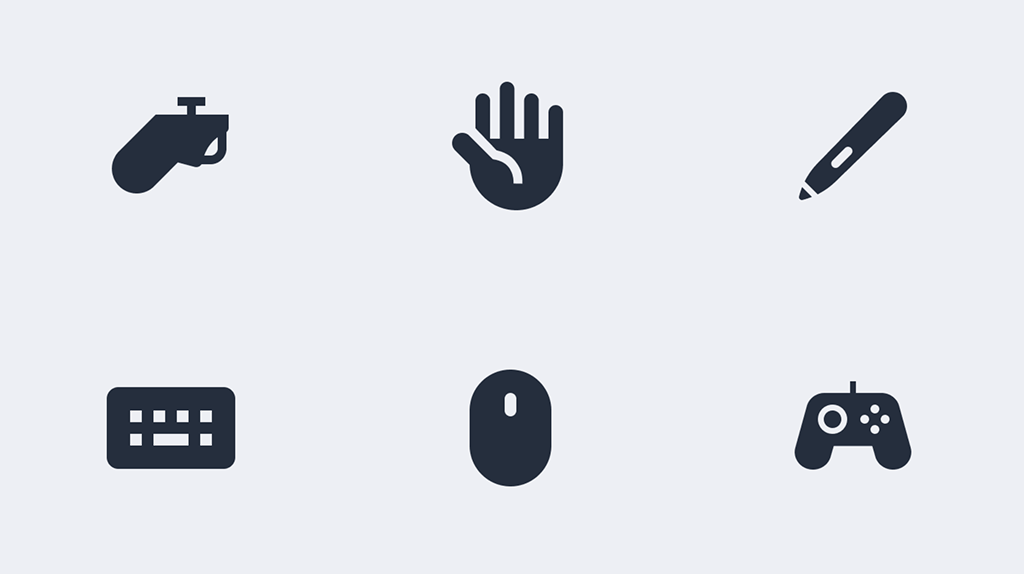
Designing general-purpose computing input for spatial platforms.
I define how multiple input modalities work together as one coherent interaction system. The goal is not to design isolated gestures or controls. It is to create a durable platform model that helps people move fluidly between direct and indirect input, while giving product teams and developers a consistent foundation to build on.
Scope & Impact
Scope
Platform-level spatial input and interaction across hands, eyes, voice, controllers, stylus, keyboards, gamepad, mouse, and microgestures. The work spans consumer OS experiences, developer SDKs, UI frameworks, design guidance, and partner ecosystems across Meta Quest, Horizon OS, HoloLens, MRTK, and Microsoft Mesh.
Impact
Turns emerging input research into coherent, shippable systems. Establishes shared interaction models and quality bars, connects first-party product experience with reusable developer capabilities, and aligns design, research, engineering, product, documentation, and partner teams around a scalable platform direction.
The System Problem
Spatial platforms combine modalities with different strengths, limitations, confidence levels, and social contexts. Hands may be immediate but imprecise. Eye gaze is fast but cannot always communicate intent. Voice is expressive but not always appropriate. Controllers, keyboards, stylus, mouse, and gamepad bring precision and familiarity, but each introduces different expectations.
The platform challenge is to define how these inputs are ranked, combined, handed off, and represented across the OS and SDK. A successful system must feel predictable to people, remain implementable for engineering teams, and scale across first-party products and third-party applications.
What I Define
Input Model & Modality Orchestration
Principles for intent, focus, targeting, modality ranking, simultaneous input, and transitions between hands, eyes, voice, controllers, and peripherals.
Interaction Behaviors & UI Frameworks
Reusable behaviors, controls, feedback models, and visual states that translate platform principles into consistent product experiences.
Productization & Implementation
Rapid prototypes, technical specifications, design reviews, and implementation partnerships that carry interaction quality from research through launch.
Ecosystem Enablement
SDK components, examples, design resources, documentation, and partner guidance that allow the system to scale beyond a single product team.
Meta Quest & Horizon OS
At Meta Reality Labs, I lead platform-level spatial input and interaction design across Meta Quest and Horizon OS. My scope covers the general-purpose computing input stack, including hands, eyes, voice, controllers, stylus, keyboards, gamepad, mouse, and microgestures.
I connect emerging input research with OS behavior, Meta XR Interaction SDK capabilities, UI frameworks, design guidance, and partner needs. Public examples include input ranking and interaction hierarchy, the Meta Horizon OS UI Set, mixed reality design guidelines, and the productization of experimental surface keyboard and touchpad input.

Public material is limited to shipped outcomes and published guidance. Confidential product details are not shown.
Microsoft HoloLens, MRTK & Mesh
At Microsoft, I developed the same systems practice across HoloLens 2, the Mixed Reality Toolkit, and Microsoft Mesh. I translated new hand and eye tracking capabilities into reusable interaction patterns, production-ready Unity components, design language, documentation, examples, and partner guidance.
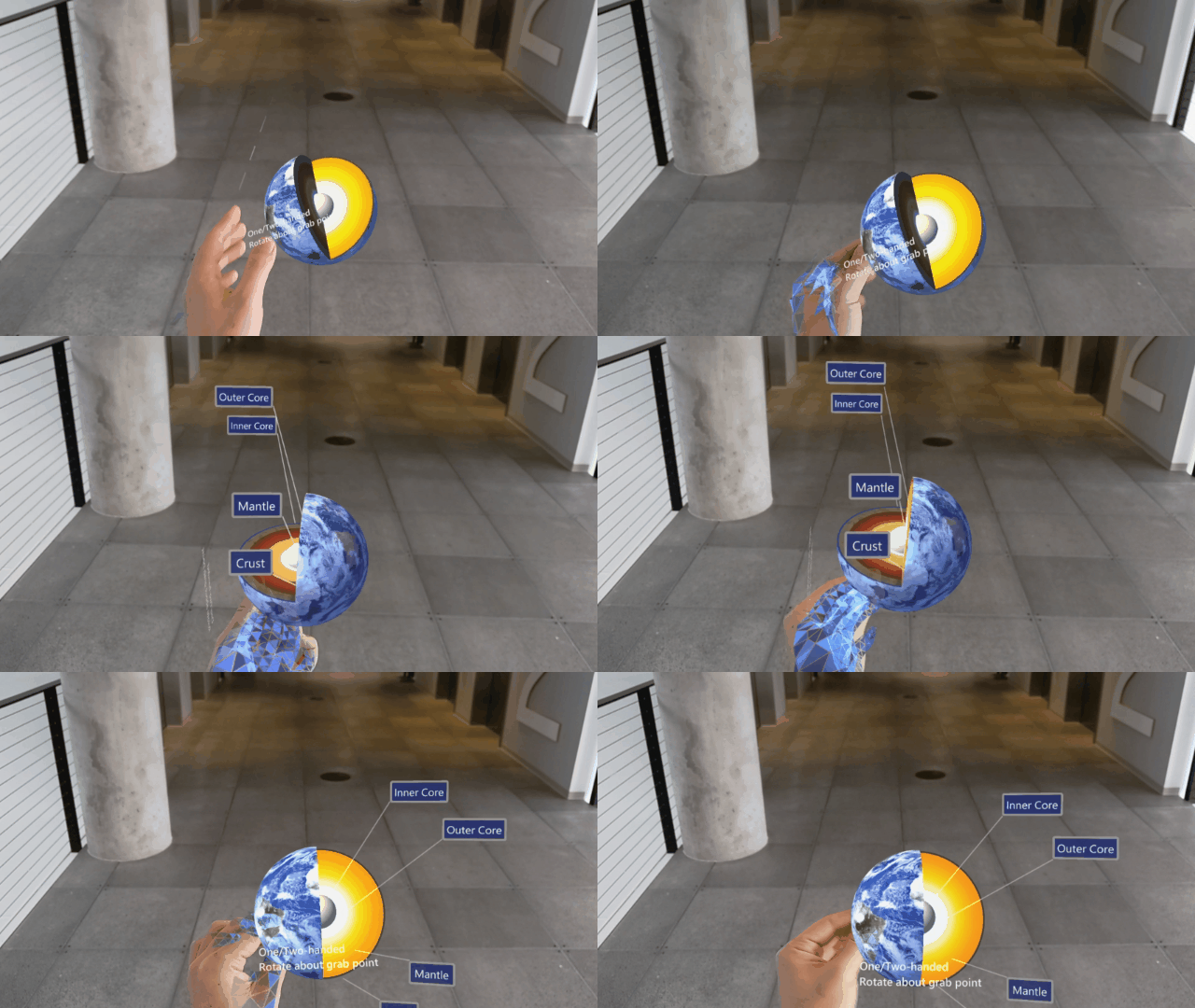
MRTK & HoloLens 2
A reusable spatial UX system connecting interaction principles, controls, tooling, documentation, and an open-source developer ecosystem.
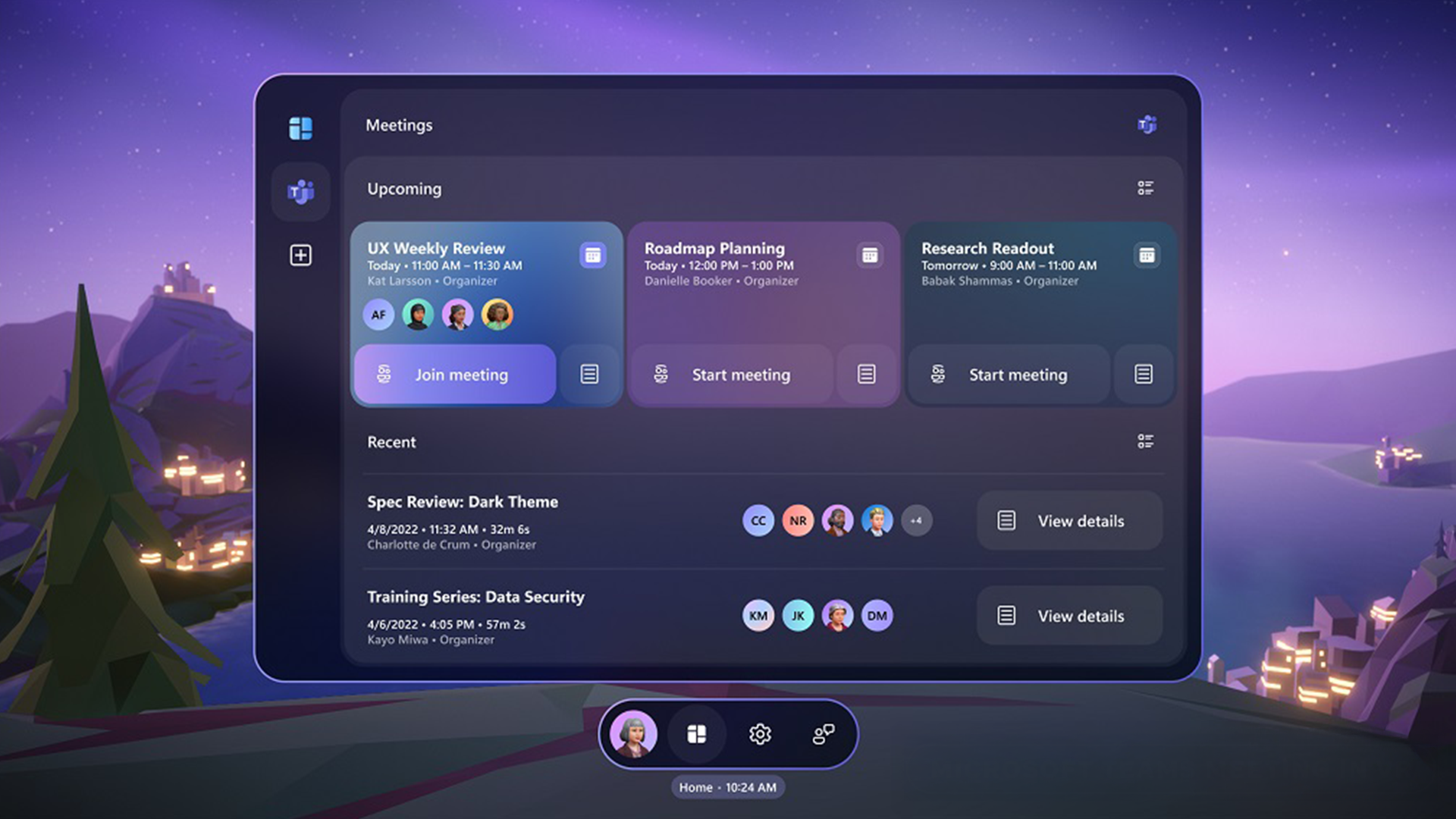
Microsoft Mesh & MR Design Language
A productivity-grade spatial UI system connecting first-party Mesh experiences with MRTK3 components and public developer tooling.
Operating at Platform Scale
- Set direction: define the interaction principles and system architecture that many teams can use.
- Build alignment: connect design, research, engineering, product, documentation, and partners around shared decisions and quality bars.
- Bridge design and engineering: prototype deeply enough to resolve technical constraints and influence implementation.
- Productize research: turn emerging modalities into durable OS and SDK capabilities.
- Scale through ecosystems: make the system reusable through components, guidance, tools, and examples.